Quick answer: The best time to seal pavers in Lake Worth is during South Florida’s dry season, roughly November through April. Most pavers here need resealing every 2 to 3 years. Whatever the month, the pavers have to be clean and fully dry, the temperature has to be inside the sealer’s label range, and no rain should be expected for at least 24 hours after it goes down.
The reason is simple: rain. According to the National Weather Service in Miami, about 69% of South Florida’s yearly rain falls during the wet season, which typically runs from about May 21 to October 17. At Palm Beach International Airport, just up the road from Lake Worth Beach, the rainy season alone averages more than 36 inches of rain. Sealing needs several dry days in a row, and summer afternoon storms make those hard to find.
Below, you’ll find whether sealing is worth it in the first place, a month-by-month guide, how to tell when your pavers are due, and the problems that show up when the timing is wrong.
Should You Seal Your Pavers in Lake Worth?
Sealing isn’t required, but for most Lake Worth homes it’s worth doing. A good sealer helps protect paver color from the strong Florida sun, makes oil, rust and leaf stains easier to clean, and helps hold the joint sand in place during heavy rain. When the joints stay full, weeds and ants have a harder time moving in.
It’s fair to know the downsides too. Sealing is ongoing maintenance, not a one-time job, because it wears off and needs to be reapplied. A high-gloss sealer can also feel slicker when wet, which matters around a pool. A low-gloss finish or a sealer with an anti-slip additive is usually the better pick for pool decks.
If you have a low-traffic walkway and you like the natural, weathered look, skipping the sealer is a reasonable choice. For driveways, patios and pool decks that take daily sun, rain and use, sealing usually pays off.
Why Timing Matters for Paver Sealing in Lake Worth
Paver sealing isn’t just “spray and go.” The timing problem comes from two separate waiting periods.
First, the pavers have to dry after cleaning. Pavers are always cleaned before sealing, and that soaks the pavers and the sand between them. One major sealer manufacturer, Alliance Gator, tells installers to wait at least 48 hours with no rain (at 60°F or warmer) so the pavers and joint sand are fully dry before sealing.
Second, the sealer needs time without rain. The same manufacturer says not to apply if rain is expected within 24 hours. Other brands give similar instructions.
Put those together and you need roughly three dry days in a row. During the wet season, Lake Worth often gets a pop-up thunderstorm in the afternoon even after a clear morning, which can reset the clock.
Heat matters too. Sealer labels have a temperature range. Alliance Gator’s low-gloss sealer lists 40°F to 85°F with the surface “cool to the touch.” SRW’s LG Paver Seal lists 50°F to 80°F. Summer afternoons in Lake Worth regularly go past those limits, and pavers sitting in direct sun get much hotter than the air. When the surface is too hot, the sealer can dry too fast and look uneven. That’s why the manufacturer advises sealing earlier in the morning during warm months.
Lake Worth’s winter weather, with mostly dry days and milder temperatures, lines up with what sealer labels ask for.
The Best Time to Seal Pavers in Lake Worth: Month by Month
If you’re deciding when to seal pavers in Lake Worth, this table is the short version.
|
Months |
Sealing conditions |
Why |
|---|---|---|
|
November to April |
Best |
Dry season. Fewer storms, milder temperatures, more back-to-back dry days. |
|
Early to mid-May |
Good, watch the forecast |
The wet season usually starts around May 21, but it has started as early as mid-April. |
|
Late May to September |
Hardest |
Peak wet season. Frequent afternoon storms and heat above many label limits. |
|
October |
Getting better |
The wet season usually ends around October 17, but it can wrap up anywhere from late September to early November. |
Season dates are based on National Weather Service Miami records.
There’s a bonus to sealing in the dry season: hurricane season runs from June 1 to November 30. Sealing in winter or early spring means the joint sand is set and protected before the heaviest rain of the year arrives.
Planning tip: Even the dry season has rainy days, usually when a cold front passes through. If you want your pavers done before summer, book in winter or early spring so there’s room to reschedule without running into May.
Local Factors That Affect Paver Sealing in Lake Worth
A few things specific to this area change how and when pavers should be sealed.
Afternoon thunderstorms. In summer, a sunny morning tells you very little about the afternoon. This is the main reason summer sealing is harder here than in many other parts of the country.
Moisture near the water. Homes close to the Intracoastal and the Lake Worth Lagoon, or around Lake Osborne, deal with humid air and morning moisture. Pavers can look dry on top while the sand in the joints is still damp underneath.
Shade in older neighborhoods. Mature trees around Parrot Cove, College Park and the Old Town area keep pavers shaded. Shaded pavers dry more slowly after cleaning and tend to grow algae and mildew faster, so they often need a deeper clean before sealing.
Rust stains from well water. Many irrigation systems in the area run on well water, which can leave orange rust stains on pavers. Sealer locks in whatever is on the surface, so rust stains need to be removed before sealing, not after.
Pool decks. Pool decks get splashed constantly, so they need a planned dry window with the pool out of use. A low-gloss or anti-slip finish is the safer choice.
Newly installed pavers. Newer homes and HOA communities in the 33449 area often have newer pavers. Don’t rush to seal them. Alliance Gator notes that most paver manufacturers recommend waiting 60 days after installation, and SRW says to wait 28 days after polymeric sand is installed. If you live in an HOA community, it’s also smart to check whether it has rules on driveway finish or color before choosing a glossy or color-enhancing sealer.
How Often to Seal Pavers in South Florida
Most pavers in South Florida need resealing every 2 to 3 years. Driveways, pool decks and pavers in full sun usually need it closer to every 2 years. Shaded, low-traffic walkways can often go longer. The type of sealer matters as well, so always check what the product label recommends.
How Long Does Paver Sealer Last?
In Lake Worth’s sun and rain, most paver sealers last about 2 to 3 years before they need a fresh coat. Sun breaks the sealer down over time, heavy rain and pressure cleaning wear it away, and car tires add wear on driveways. That’s why a driveway usually needs resealing sooner than a covered patio.
The Water Test: How to Tell It’s Time to Reseal
You don’t have to guess. Sprinkle some water on a few spots of your pavers:
-
If the water beads up, the sealer is still working.
-
If the water darkens the paver and soaks in within a minute, it’s time to reseal.
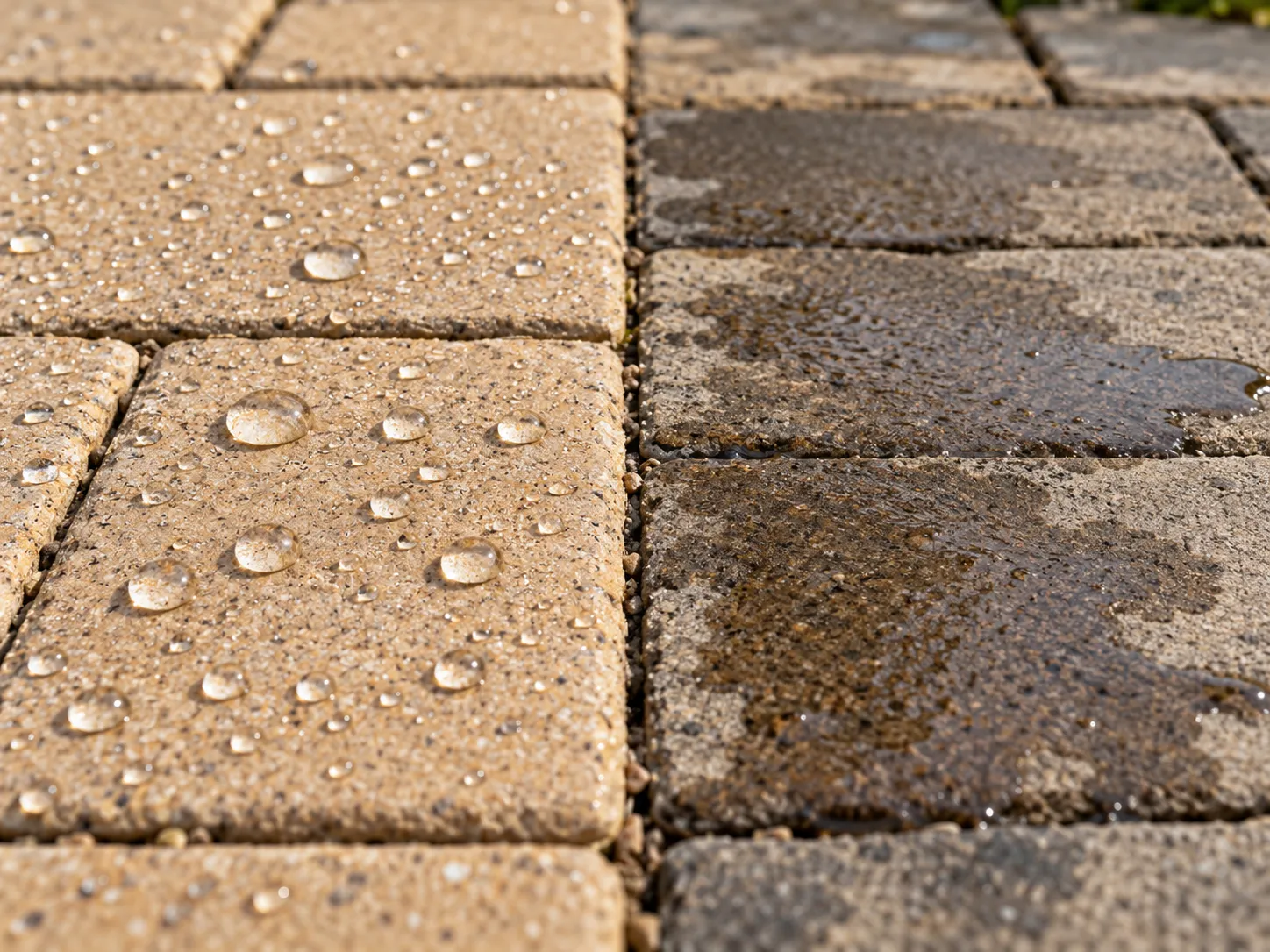
Other signs your pavers are due: the color looks faded or chalky, joint sand is washing out, weeds and ants are coming back in the joints, or stains soak in faster than they used to.
Common Paver Sealing Problems Caused by Bad Timing
Most paver sealing problems come down to timing or prep, not the sealer itself.
-
Rain on fresh sealer. Water trapped in or under the sealer can leave white spots or a cloudy, milky look (sometimes called “blushing”). Depending on the sealer, it may be correctable, or the area may need to be stripped and resealed. Don’t scrub it yourself; have a professional look at it.
-
Sealing damp pavers. This causes the same trapped-moisture problem, even if it never rains.
-
Sealing over stains or efflorescence. Efflorescence is the white, powdery residue that often appears on newer pavers. If it isn’t cleaned off first, the sealer locks it in. The same goes for rust and oil stains.
-
Sealing a hot surface. Midday summer heat can make the sealer dry too fast and look patchy.
-
Using it too soon. SRW’s tech sheet lists 24 hours before foot traffic and 72 hours before vehicle traffic. Driving on it early can leave tire marks.
What a Proper Paver Sealing Job Looks Like
A well-timed paver sealing job usually follows these steps:
-
Check the forecast for a dry window of several days.
-
Deep clean the pavers, removing dirt, algae, weeds, rust and efflorescence. Here’s how our paver cleaning in Lake Worth works.
-
Let the pavers and joint sand dry fully, usually at least 48 hours of dry weather.
-
Refill the joint sand where it has washed out.
-
Apply the sealer in thin, even coats within the label’s temperature range, often in the morning during warm months.
-
Keep off it for the time the label says, commonly about 24 hours for foot traffic and up to 72 hours for cars.
Can You Seal Pavers During Summer in Lake Worth?
Yes, but it takes more care. Summer sealing works best early in the morning, when the surface is still cool, on a day with a clear forecast and enough dry hours afterward. The trade-off is that summer jobs get rescheduled more often because of weather. If a company is willing to seal right before an afternoon storm just to stay on schedule, that’s a warning sign. Waiting a day or two is always cheaper than redoing a cloudy, damaged sealer.
How to Choose a Paver Sealing Company in Lake Worth
Before you hire anyone, ask a few simple questions:
-
How do you handle the weather? A good company watches the forecast and reschedules when it needs to.
-
How long do you wait after cleaning before sealing? If the answer is “same day, no matter what,” be careful.
-
What sealer do you use? Ask about water-based vs. solvent-based, the gloss level, and slip resistance for pool decks.
-
Is joint sand included? Refilling washed-out joints should be part of the job, not an afterthought.
-
Are you licensed and insured? Ask for proof.
-
Can I see local work? Before-and-after photos from nearby homes tell you more than any ad.
Why Lake Worth Homeowners Choose Dan Ryan’s Pressure Cleaning
Dan Ryan’s Pressure Cleaning and Window Cleaning is a family-owned company based right here in Lake Worth, serving local homeowners since 2012. Because we handle both the cleaning and the sealing, there’s no gap where freshly cleaned pavers sit and get dirty again before a different company shows up to seal them.
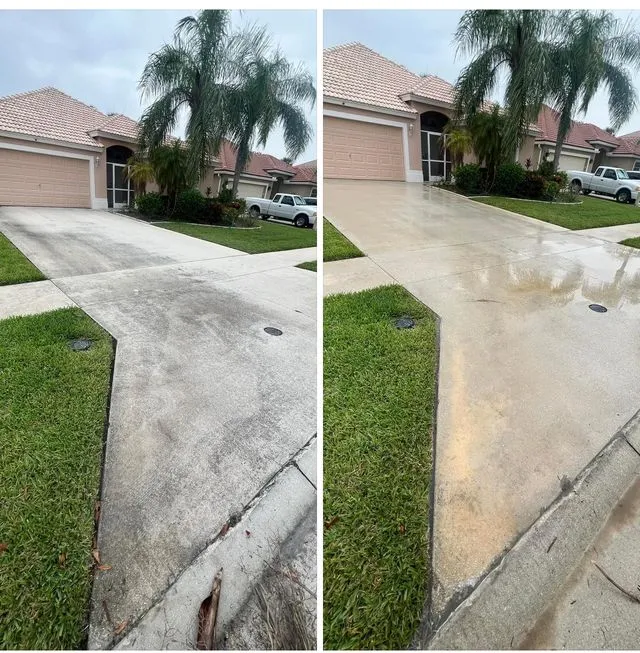
We know the local conditions covered in this guide, from shaded pavers in older neighborhoods to rust stains from well water and pool decks near the water. If you’re ready to protect your driveway, patio or pool deck, learn more about our paver cleaning and sealing in Lake Worth, or see our full paver sealing service for other areas we serve.
Frequently Asked Questions
When is the best time to seal pavers in Florida? In South Florida, the best time is the dry season, roughly November through April. You’ll get more dry days in a row, milder temperatures and fewer surprise storms, which is what sealer labels call for.
How often should you seal pavers in Florida? Most pavers in Florida need resealing every 2 to 3 years. Driveways and pool decks in full sun often need it closer to every 2 years. A quick water test will tell you if your sealer is still working.
How soon can you seal new pavers? Wait before sealing new pavers. Alliance Gator notes that most paver manufacturers recommend waiting 60 days after installation, and some products give a different number (SRW, for example, says 28 days after polymeric sand). Follow your installer’s and the sealer’s guidance.
What happens if it rains after sealing pavers? If rain hits the sealer before it has had time to dry, it can leave white spots or a cloudy look. That’s why most sealer labels say not to apply if rain is expected within 24 hours. If it happens, have a professional check it before you try to fix it.
How long after sealing pavers can you drive on them? It depends on the product. One common sealer (SRW’s LG Paver Seal) lists 24 hours for foot traffic and 72 hours for vehicles. Always follow the label or your contractor’s instructions.
Do you serve areas near Lake Worth? Yes. Along with Lake Worth, we serve Boca Raton, Boynton Beach, Delray Beach, Greenacres, Jupiter, Palm Beach, Palm Beach Gardens, Parkland, Royal Palm Beach, Wellington, West Palm Beach and nearby areas.
Book Your Paver Sealing While the Dry Season Is Here
The dry season is the easiest window of the year to get pavers sealed properly in Lake Worth, and it doesn’t last forever. If your pavers fail the water test or are starting to fade, now is the time to plan.
Dan Ryan’s Pressure Cleaning and Window Cleaning can clean, re-sand and seal your pavers on a dry, well-timed schedule. First-time clients get up to $100 off their service. Get your free quote today.