You walk out one morning and notice orange-brown streaks running across your driveway, sidewalk, or patio. They weren’t there a few months ago, and scrubbing them with a regular cleaner barely makes a dent. If this sounds familiar, you’re not dealing with ordinary dirt those are rust stains, and they’re one of the most common exterior surface problems homeowners face across South Florida.
The frustrating part is that rust stains don’t just look bad. The longer they sit, the deeper they penetrate into the surface, making them progressively harder to remove. Understanding what’s actually causing them is the first step toward getting rid of them for good and making sure they don’t come back as quickly after treatment.
What Causes Rust Stains on Concrete? (The Short Answer)
Rust stains on concrete and pavers form when iron-containing water or materials come into contact with the surface and oxidize. In plain terms: iron + water + oxygen = rust, and that rust transfers directly onto whatever surface it lands on. In Florida specifically, the combination of well water with high iron content, year-round irrigation systems, and near-constant humidity creates near-perfect conditions for rust staining which is why it shows up so consistently in Palm Beach County neighborhoods.
The #1 Cause: Sprinkler Systems and Iron-Rich Well Water
If you have a lawn irrigation system pulling from a well, this is almost certainly where your rust stains are coming from. Well water in South Florida is naturally high in dissolved iron it’s a geological feature of the region’s groundwater, not a sign that anything is wrong with your system specifically.
The problem is what happens when that iron-rich water sprays onto your driveway, sidewalk, pavers, or house exterior every morning. As the water evaporates, the iron it was carrying gets left behind on the surface. Over time and it doesn’t take long in Florida’s heat that iron oxidizes and bonds to the concrete or pavers, leaving behind those characteristic orange-brown streaks that run in the direction the sprinkler was spraying.
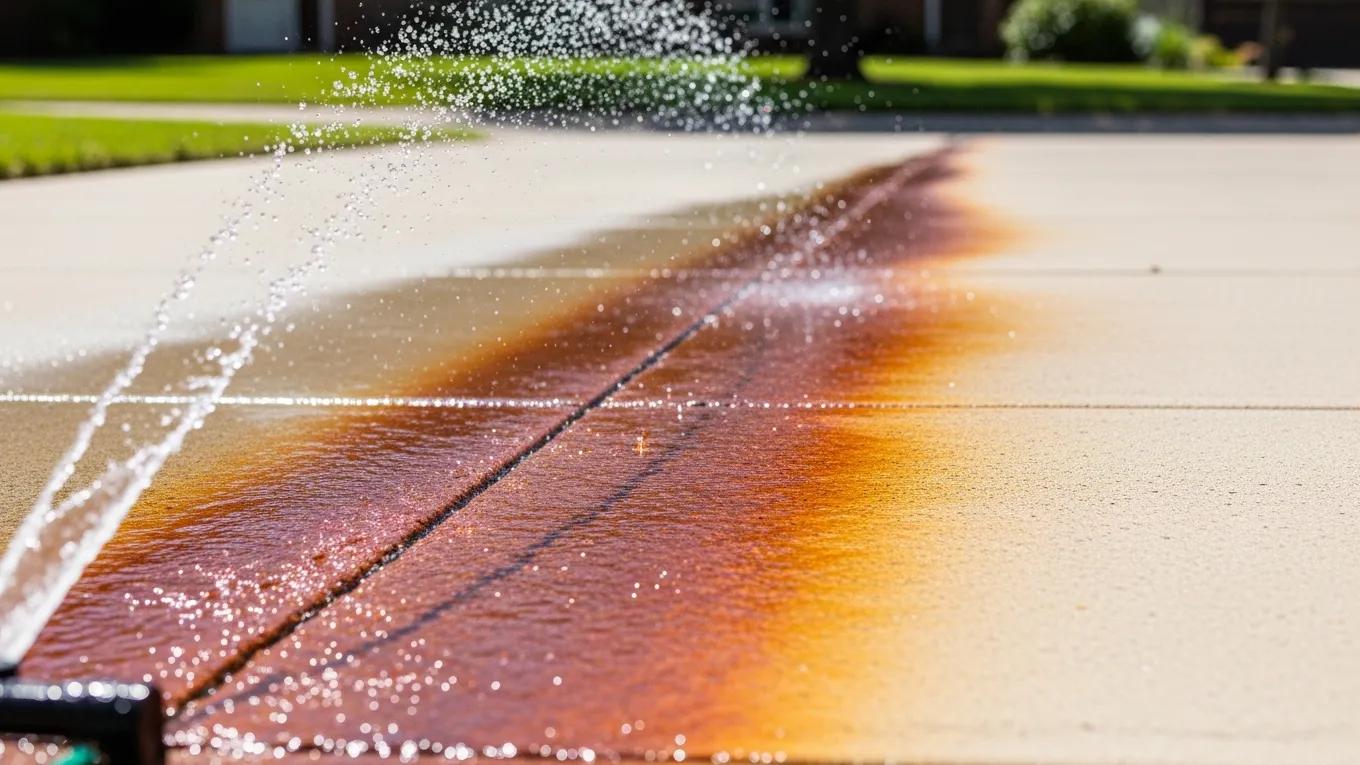
If you look at where the rust stains are concentrated and trace them back, they almost always point directly at a sprinkler head. That’s your confirmation. If this sounds like your situation, our rust removal service is specifically designed to treat iron-based staining from irrigation systems.
Rust Stains on Driveways: Metal Objects and Rebar Bleed-Through
Sprinklers aren’t the only culprit. Driveways develop rust stains from a couple of other common sources that are worth knowing about:
Metal Objects Left on the Surface
Patio furniture, BBQ grills, steel planters, metal tools, or even a forgotten steel wool pad left on the driveway can all leave rust rings or streaks on concrete. The moisture from rain or irrigation gets under the metal object, starts the rusting process, and the runoff stains the concrete underneath.
This type of staining tends to be more localized you’ll see a ring or patch rather than long directional streaks and it’s usually easier to identify the source since it sits directly beneath where the object was sitting.
Rebar Bleed-Through
This one surprises a lot of homeowners. Concrete driveways and sidewalks are reinforced with steel rebar underneath the surface. When water penetrates aging or cracked concrete and reaches that rebar, the steel starts to rust and that rust can bleed up through the concrete itself, showing as reddish-brown staining on the surface even though the source is below ground.
If you’re seeing rust stains in areas where there’s no obvious above-ground source (no sprinkler coverage, no metal furniture nearby), rebar bleed-through is worth considering especially in older driveways. In either case, professional driveway pressure washing combined with rust treatment is the most effective way to restore the surface.
Rust Stains on Pavers: Why They’re Different From Concrete
Pavers absorb moisture differently than solid concrete, which affects both how rust stains form and how they need to be treated. The joints between pavers are particularly vulnerable water and iron-rich runoff settle into them and sit longer than they would on a smooth concrete surface, giving the oxidation process more time to work before the surface dries out.
Pavers that haven’t been sealed are significantly more susceptible to rust staining for exactly this reason. Sealing creates a barrier that limits how deeply water and iron can penetrate the surface, which is why rust stains on sealed pavers tend to be less severe and easier to remove than on unsealed ones.
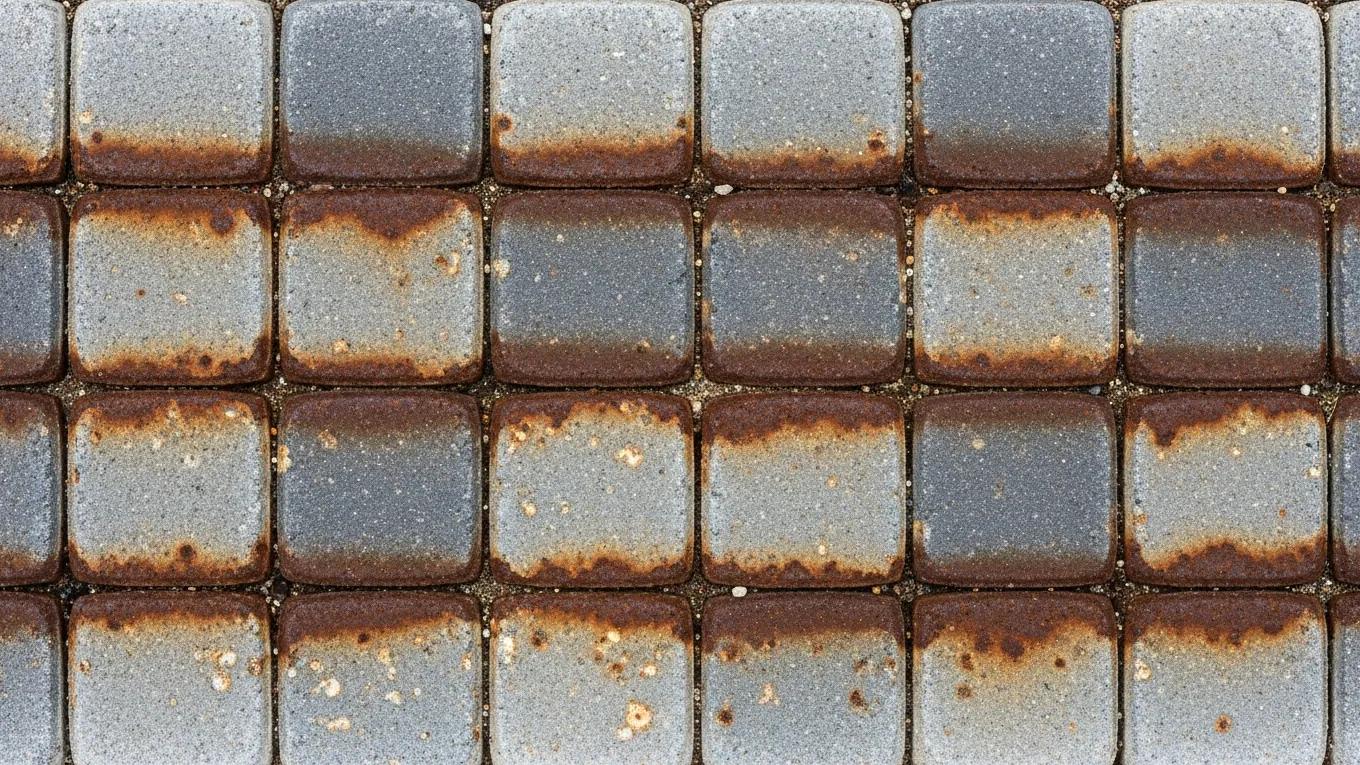
If you’ve had rust stains treated on your pavers and they keep coming back, unsealed pavers combined with an active irrigation system nearby is almost always the reason. Paver sealing after rust treatment creates a protective barrier that significantly slows down future staining.
Rust Stains on Stucco and House Exteriors
Rust stains don’t stay on the ground. Sprinkler systems that spray onto walls, siding, or stucco leave the same iron deposits on vertical surfaces that they do on driveways and pavers the runoff just streaks downward rather than pooling.
Stucco is porous, which makes it particularly prone to absorbing those iron deposits quickly. The staining can show up as long vertical streaks running down from where the sprinkler was hitting, or as a general discoloration across sections of the wall that are in the sprinkler’s range.
It’s worth noting that rust treatment on exterior walls needs to happen before a standard house wash, not as an afterthought. Pressure washing a rust-stained wall without treating the stain first typically just spreads the iron residue across a larger area rather than removing it.
Can You Remove Rust Stains Yourself?
Homeowners often try a few things before calling a professional: bleach, pressure washing, or store-bought concrete cleaners. Here’s an honest breakdown of why those usually fall short:
- Bleach doesn’t remove rust it can actually set the stain deeper into the surface in some cases
- Pressure washing alone removes surface dirt but doesn’t chemically break down the iron bond that makes rust stains stick
- Store-bought rust removers work on fresh, light staining but rarely penetrate deep enough for stains that have been sitting for months or years
Professional rust removal uses specific chemical treatments formulated to break down iron bonds at a molecular level, followed by a thorough rinse and surface cleaning. The difference in results between a DIY attempt and a professional treatment is usually significant especially on older stains that have had time to work their way into the surface.
Frequently Asked Questions
What causes rust stains on concrete in Florida?
The most common cause in Florida is iron-rich well water from irrigation/sprinkler systems. As the water evaporates, iron deposits are left on the surface and oxidize into rust stains. Other causes include rusting metal objects placed on the surface and rebar bleed-through in older concrete.
Why do I keep getting rust stains on my driveway even after cleaning?
If rust stains keep returning after cleaning, the underlying source usually a sprinkler system hitting the surface hasn’t been addressed. Treating the stain without fixing the source just means the staining cycle repeats. After professional rust removal, adjusting your sprinkler heads to avoid the driveway is the most effective way to reduce recurrence.
Are rust stains on pavers harder to remove than on concrete?
Unsealed pavers can be harder to treat because they’re more porous and absorb iron deposits more deeply. Sealed pavers are generally easier to clean and respond better to rust treatment.
Does pressure washing remove rust stains?
Pressure washing alone doesn’t remove rust stains it cleans surface dirt but doesn’t break down the iron bond. Effective rust removal requires a chemical treatment specifically designed for iron/rust, followed by rinsing and cleaning.
How long does rust stain removal take? Most residential rust removal jobs are completed in a single visit, typically within a few hours depending on the size of the affected area and how deep the staining has penetrated.
Stop Rust Stains Before They Get Worse
Rust stains are one of those problems that get noticeably harder to fix the longer they sit. A stain that’s been there a few weeks responds much better to treatment than one that’s been baking into your driveway through a full Florida summer.
If you’re seeing orange-brown streaks on your driveway, pavers, sidewalk, or exterior walls anywhere in Palm Beach County, the team at Dan Ryan’s Pressure Cleaning and Window Cleaning can assess the source, treat the staining, and walk you through options to reduce the chances of it coming back as quickly.
First-time clients get up to $100 off their service. Get your free quote today we serve homeowners and commercial properties across Boca Raton, Boynton Beach, Delray Beach, Jupiter, Lake Worth, West Palm Beach, Wellington, and surrounding areas.