If you’ve driven through neighborhoods like Parrot Cove or College Park lately and glanced up at the rooflines, you’ve probably noticed it: dark streaks creeping down otherwise well-kept homes. Maybe you’ve spotted the same thing on your own roof and assumed it was dirt, or just the roof getting older. Here in Lake Worth, that black streaking is almost never dirt and understanding what it actually is can save you thousands of dollars down the road.
This guide breaks down what those streaks really are, why Lake Worth’s specific location and climate make them so common, which roofs in the area are most at risk, and how professional roof cleaning removes them safely. By the end, you’ll know exactly what you’re looking at on your own roof and what to do about it.
What Those Black Streaks on Your Lake Worth Roof Really Are
Let’s clear up the biggest misconception first, since it’s the direct answer most homeowners are searching for.
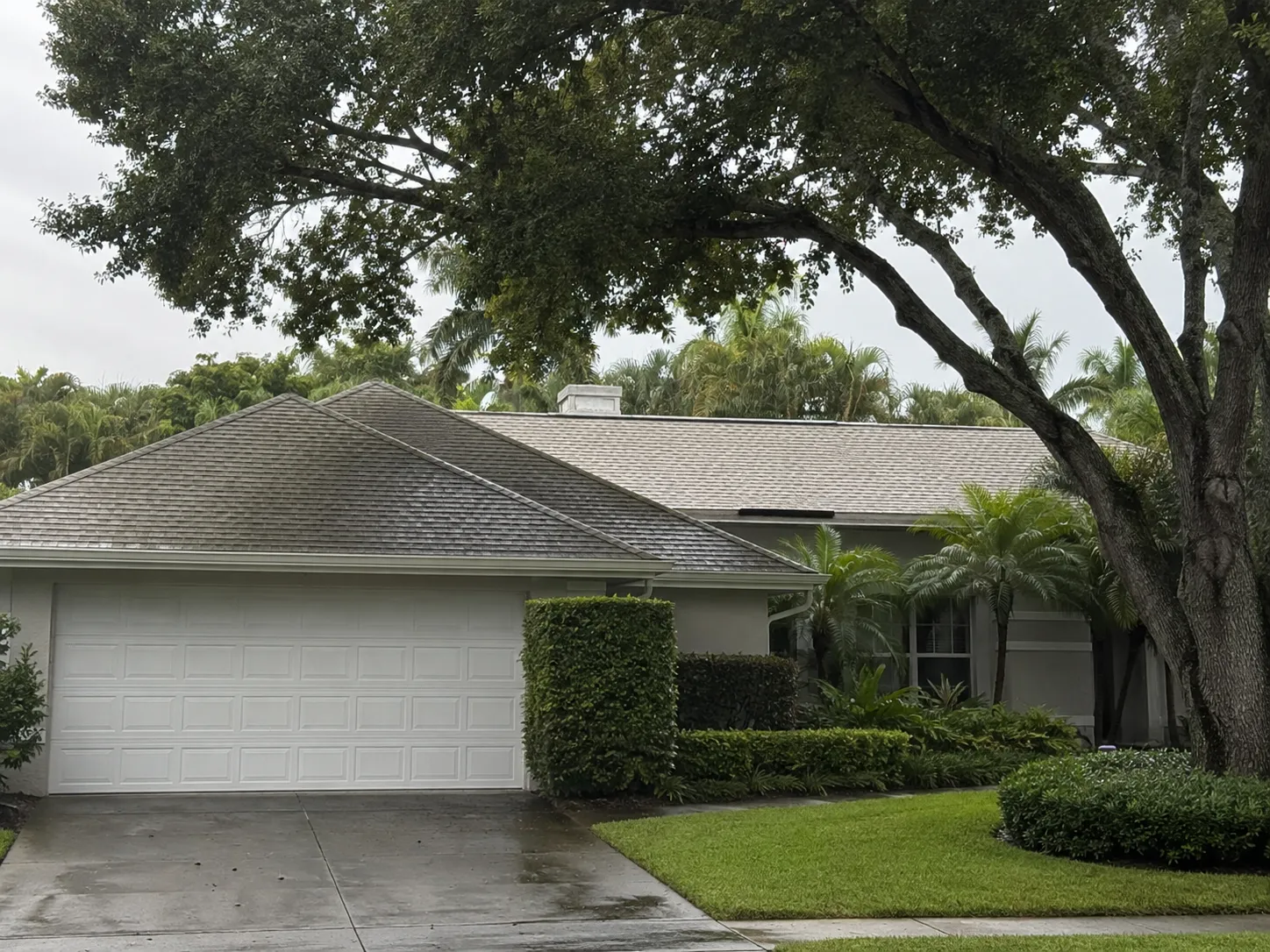
The black streaks running down your roof aren’t dirt, mildew, or age. They’re a living organism a type of algae called Gloeocapsa magma. It feeds on the limestone and calcium carbonate filler found in most asphalt shingles, and as it grows, it develops a dark protective coating to shield itself from the sun. That dark coating is exactly what shows up as those ugly black or brown streaks running down toward your gutters.
Here’s why that matters beyond appearance: as this algae spreads, it holds moisture against your roofing materials and slowly eats away at the shingle granules that protect your roof. Left untreated for years, it can shorten your roof’s lifespan and lead to a replacement bill that dwarfs what a cleaning would have cost. In a climate like ours, this isn’t a slow problem it accelerates.
Why Roof Algae Is So Common in Lake Worth
Lake Worth sits in a near-perfect storm of conditions for algae growth, and a few of them are specific to our corner of Palm Beach County.
First, there’s the humidity and heat. South Florida stays warm and moist nearly year-round, and Gloeocapsa magma thrives in exactly those conditions. Unlike drier climates where algae struggles to establish, here it grows aggressively for most of the calendar.
Second, there’s our proximity to water. With the Intracoastal to the east, Lake Osborne to the west, and the Atlantic just beyond, homes across Lake Worth deal with constant moisture in the air and salt carried on the breeze. That combination feeds algae and adds mineral buildup that dry inland cities simply don’t face at the same intensity.
Third, tree cover plays a role. Many of Lake Worth’s established neighborhoods particularly the older, tree-lined streets around the Old Town Historic District and Bryant Park have mature canopies that keep roofs shaded and damp for longer after rain. Shade and trapped moisture are ideal for algae, which is why heavily shaded homes often streak faster than their sunnier neighbors.
Put those three factors together, and it’s no surprise that roof algae shows up across Lake Worth from the beachside historic districts near 33460 all the way west toward the 33449 communities near Wellington and Lake Clarke Shores.
Tile vs. Shingle: Roof Cleaning Isn’t One-Size-Fits-All in Lake Worth
One thing many roof cleaning articles skip and something that genuinely matters in this area is that Lake Worth has a real mix of roof types, and they can’t all be cleaned the same way.
Barrel Tile and Clay Roofs
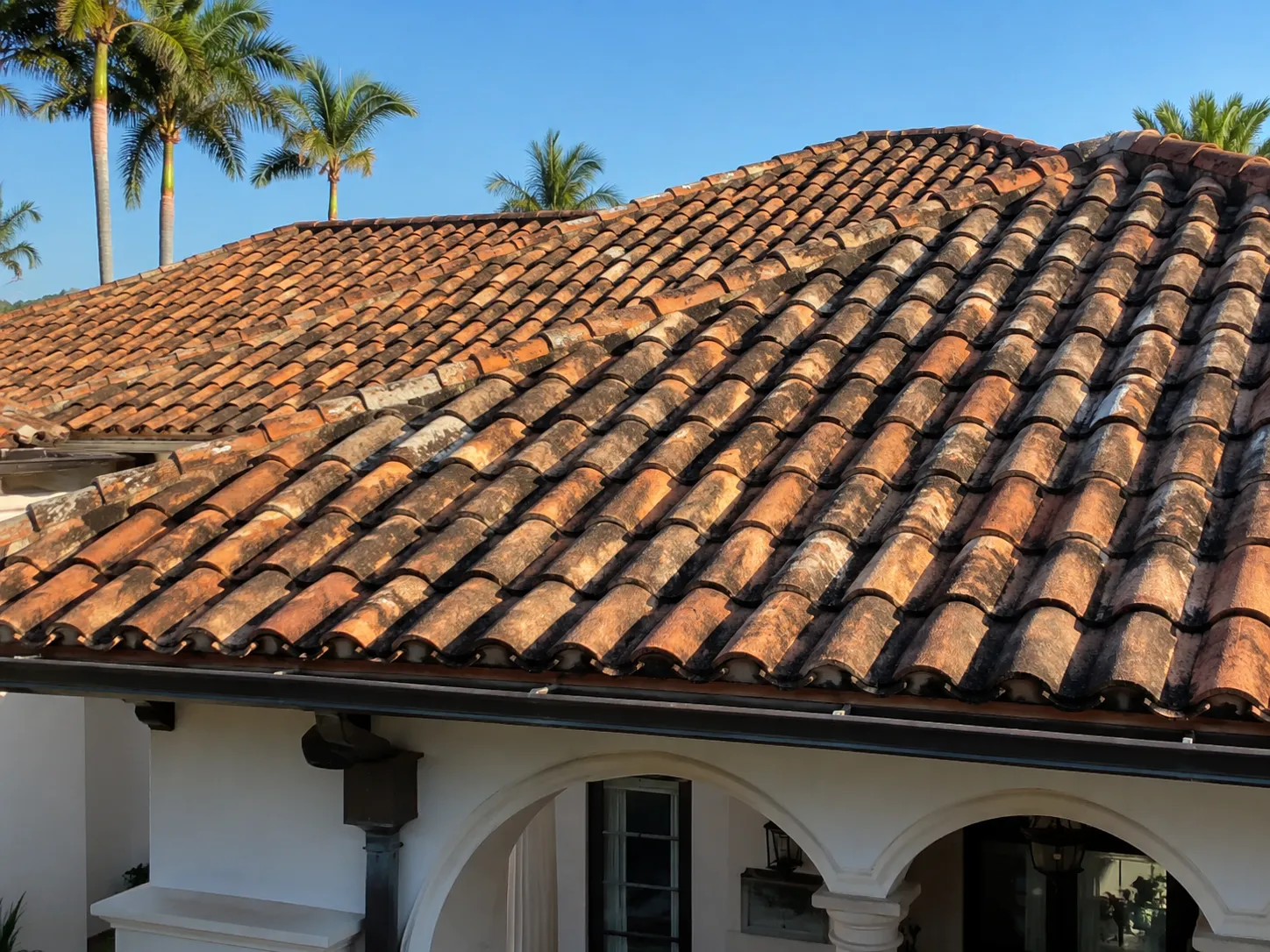
Drive through the coastal neighborhoods and you’ll see plenty of Spanish-style barrel tile and clay roofs, especially on older and higher-end homes near the Intracoastal. Tile is durable, but it’s also brittle and prone to cracking under foot traffic or high pressure. Cleaning tile requires a careful low-pressure approach and technicians who know how to work around fragile tile without stepping wrong.
Asphalt Shingle Roofs
The majority of homes across Lake Worth’s residential streets from College Park to the newer developments out west use asphalt shingles. Shingles are especially vulnerable to Gloeocapsa magma because of that calcium carbonate filler the algae feeds on. They also can’t handle high-pressure washing, which strips away the protective granules and voids many manufacturer warranties.
The takeaway: whether your home wears tile or shingle, blasting it with a pressure washer is the wrong move. Which brings us to the method that actually works.
Why Soft Washing Is the Right Method for Lake Worth Roofs
Soft washing is the industry-standard method for a reason, and it’s what any reputable roof cleaner in Lake Worth should be using.
Instead of relying on force, soft washing uses low pressure combined with specialized cleaning solutions that kill the algae, mold, and moss at the root rather than just blasting the surface layer off. The solution does the work, not the pressure which means the algae is actually eliminated instead of temporarily knocked loose to regrow within months.
The benefits for a Lake Worth homeowner are straightforward: no damage to fragile tile, no stripped granules on shingles, no voided warranty, and results that last far longer than a high-pressure “quick clean.” Because soft washing kills the organism rather than just removing the visible coating, your roof stays clean significantly longer before regrowth begins.
If you also have algae or mildew streaking on your walls, a roof cleaning pairs naturally with house washing, since the same organisms that stain your roof often spread to siding and stucco.
What to Look for When Choosing a Roof Cleaning Company in Lake Worth
Not every company that owns a pressure washer should be on your roof. When you’re comparing roof cleaning providers in the Lake Worth area, here’s what actually matters:
- They use soft washing, not high pressure. If a company talks about “power washing” your roof, that’s a red flag for tile and shingle alike.
- They’re licensed and insured. Roof work carries real risk. Make sure the company carries proper coverage before anyone climbs a ladder on your property.
- They know local roof types. A company familiar with the barrel tile near the Intracoastal and the shingle roofs out west will approach each job correctly instead of using one blanket method.
- They’re genuinely local. A provider based in and serving Palm Beach County from Lake Worth to Greenacres, Lantana, Palm Springs, and Wellington understands our specific climate and algae problem in a way an out-of-area contractor won’t.
A quick note on HOAs: several Lake Worth communities, especially in the historic districts and planned developments, have appearance standards that make a streaked roof an actual compliance issue, not just an eyesore. If you’ve received a notice about your roof’s appearance, professional cleaning is almost always faster and cheaper than the alternatives.
Why Lake Worth Homeowners Choose Dan Ryan’s Pressure Cleaning
Dan Ryan’s Pressure Cleaning and Window Cleaning is a local, family-owned company based right here in Lake Worth, FL. We’ve built our business around South Florida’s exterior cleaning needs — and roof algae is one of the most common problems we solve for homeowners across Palm Beach County.
We use safe soft washing methods designed to protect your roof while eliminating algae, mold, and black streaks at the source. Because we’re local, we understand the difference between cleaning a tile roof near the Intracoastal and a shingle roof out in the western communities, and we tailor our approach accordingly. And since roof algae rarely travels alone, we can handle your roof cleaning, driveway and exterior pressure washing, and paver sealing in one coordinated visit.
Frequently Asked Questions
What are the black streaks on my roof in Lake Worth?
They’re a type of algae called Gloeocapsa magma, not dirt. It feeds on the filler in asphalt shingles and develops a dark coating that appears as black streaks. Florida’s humidity makes it extremely common across Lake Worth and Palm Beach County.
Can I pressure wash my own roof to remove the algae?
It’s strongly discouraged. High pressure strips protective granules from shingles, cracks tile, and can void your roof warranty often causing more expensive damage than the algae itself. Soft washing is the safe, effective alternative.
How often should Lake Worth roofs be cleaned?
In South Florida’s humid climate, most roofs benefit from cleaning roughly once a year to stay ahead of algae and moss. Heavily shaded homes near mature tree canopies may need attention a little more often.
Does roof cleaning really extend my roof’s life?
Yes. By removing algae that traps moisture and eats away at shingle granules, roof cleaning helps preserve the materials and can meaningfully delay the need for a costly replacement.
Do you serve areas outside Lake Worth?
Yes. Along with Lake Worth, we serve Boca Raton, Boynton Beach, Delray Beach, Greenacres, Jupiter, Palm Beach, Palm Beach Gardens, Parkland, Royal Palm Beach, Wellington, West Palm Beach, and surrounding areas.
Get Your Lake Worth Roof Cleaned the Right Way
Those black streaks won’t go away on their own and every month they sit up there, they’re doing a little more damage to one of the most expensive parts of your home. The good news is that catching it early makes the fix simple and affordable.
If you’re seeing algae or black streaks on your roof anywhere in Lake Worth or the surrounding Palm Beach County area, Dan Ryan’s Pressure Cleaning and Window Cleaning can assess your roof, recommend the right soft washing approach for your tile or shingle, and restore it safely. First-time clients get up to $100 off their service. Get your free quote today.